Grounded in research
Why mentoring matters
Future Pilots Mentoring is built on research and founded by Jan-Michael Nevlund, an airline pilot and university alumnus at Lund University. Its conclusion is simple: talent is everywhere — access is not.
The barriers the research found
The aviation industry needs more than 800,000 new pilots by 2040 (Boeing, 2022). Yet the study shows that the biggest obstacles are not ability or ambition — they are structural:
Cost
Pilot training often exceeds $100,000, and full scholarships are increasingly rare — discouraging talent from less privileged backgrounds.
SimpleFlying, 2024; Elevate Her Aviation, 2024
Awareness & role models
Many young people in underprivileged communities never meet a pilot by chance, so a flying career feels out of reach before it ever begins.
ICAO Global Aviation Gender Summit, 2023; Kiley, 2024
Systemic access
Underfunded schools often cannot sustain aviation career programs, and access to training depends too much on geography and local initiative.
Kiley, 2022; Sobieralski & Hubbard, 2019
What actually works
Early exposure
Meeting a real pilot early — before career choices are made — is one of the most effective interventions, especially in disadvantaged areas.
Nevlund, 2025; Department for Transport, 2023
Mentoring & role models
Constructivist education research shows students build career ambitions and identity through guidance from mentors who reflect their own background.
Vygotsky, 1986; Wheatley, 1991; Morgenroth et al., 2015
Non-profit outreach
Non-profit and community-led initiatives bridge the gaps public systems leave — through mentorship, school visits, scholarships and hands-on experience.
Kiley, 2024; AOPA, 2024; Sobieralski & Hubbard, 2019
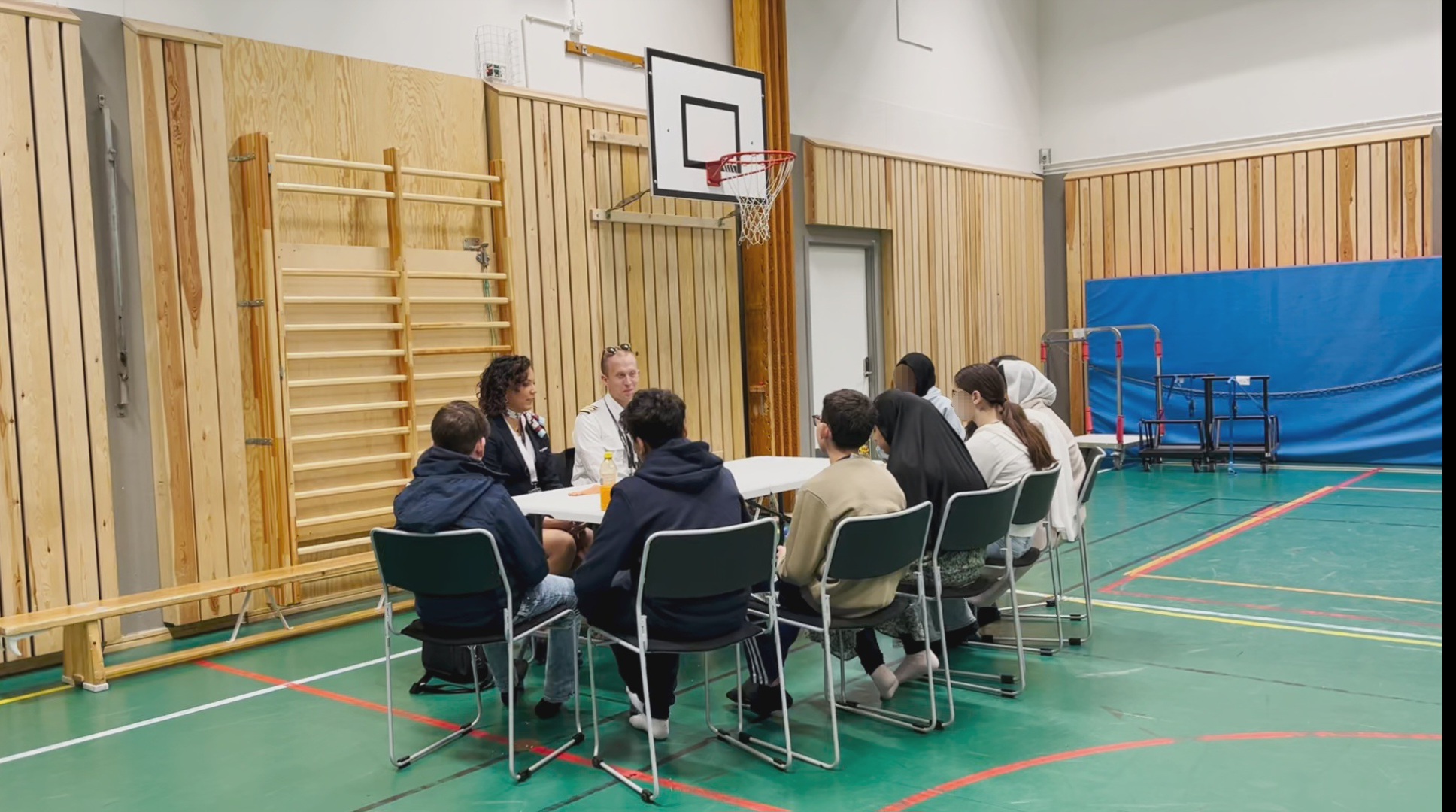
In students' own words
One visit can change a future
During a Future and Mentoring Day at Krokbäckskolan in Malmö, students shared what meeting a real airline pilot meant to them:
“What was good about today was meeting a pilot and asking questions about the profession.”
“You can be whoever you want to be if you believe in yourself.”
“You can be whatever you want, and you do not have to give up.”
What schools say
Trusted in the classroom
Before building this platform, our founder visited schools across Malmö to talk about life as a pilot. Here is what the schools wrote afterwards.
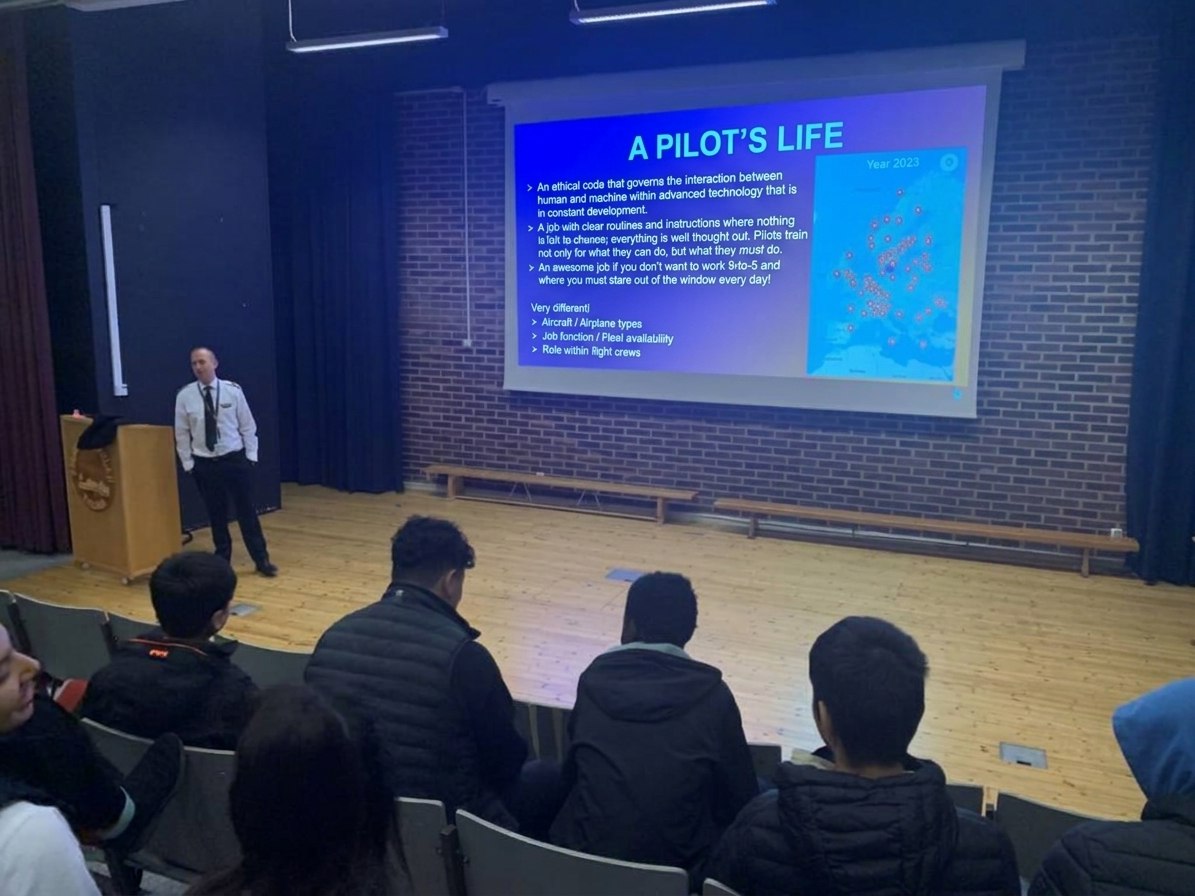
“The students were very positive about Jan-Michael's lecture. Several students expressed that they were already interested in the pilot profession, and after the lecture, many were curious to learn more. Both students and teachers appreciated Jan-Michael's approach and saw him as a good role model for our students.”
Sources
This page draws on Flight For All (Nevlund, 2025, Lund University School of Aviation) and the research it reviews, including:
- Boeing. (2022). Pilot and Technician Outlook.
- Department for Transport. (2023). Options for Addressing the Cost of Pilot Training.
- ICAO. (2023). Global Aviation Gender Summit.
- Kiley, K. (2022, 2024). Research on aviation career programs and access barriers.
- Morgenroth, T., Ryan, M. K., & Peters, K. (2015). The motivational theory of role modeling.
- Sobieralski, J. B., & Hubbard, S. M. (2019). Barriers to entry in aviation training.
- Vygotsky, L. S. (1986). Thought and Language.
- Wheatley, G. H. (1991). Constructivist perspectives on learning.
- Aircraft Owners and Pilots Association. (2024). You Can Fly high school initiative.